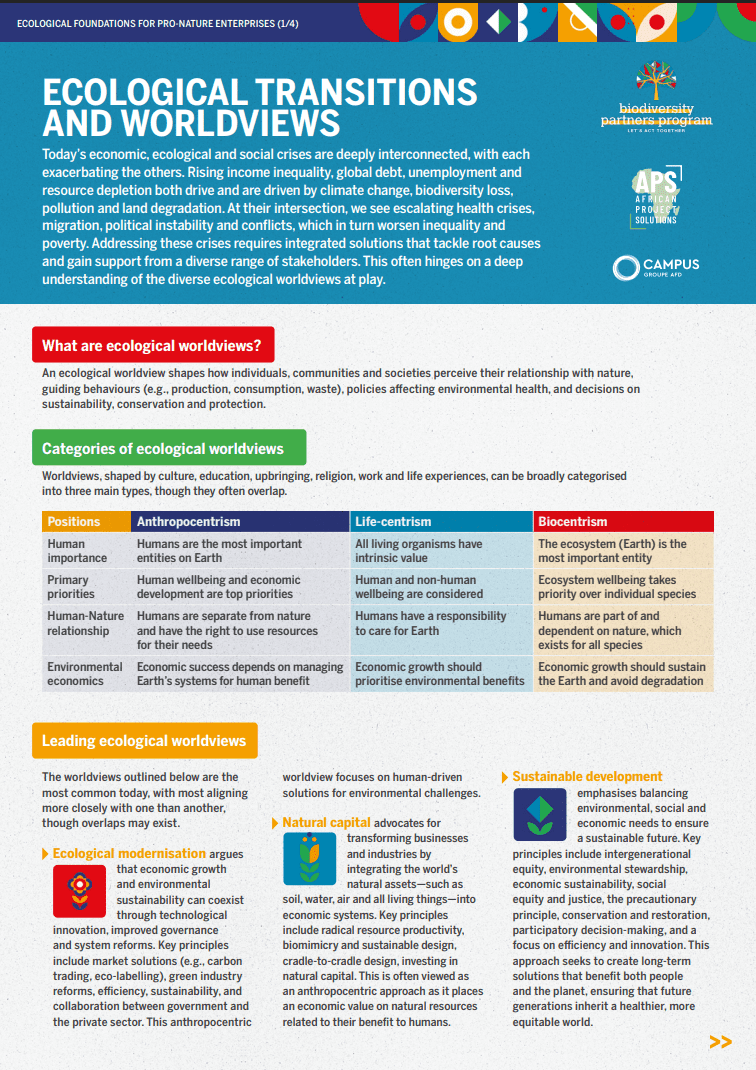
Today’s economic, ecological and social crises are deeply interconnected, with each exacerbating the others. Rising income inequality, global debt, unemployment and resource depletion both drive and are driven by climate change, biodiversity loss, pollution and land degradation. At their intersection, we see escalating health crises, migration, political instability and conflicts, which in turn worsen inequality and poverty. Addressing these crises requires integrated solutions that tackle root causes and gain support from a diverse range of stakeholders. This often hinges on a deep understanding of the diverse ecological worldviews at play.
Biodiversity, derived from the Greek word bíos meaning ‘life’ and diversity referring to the variety of forms, is the immense variety of life on Earth, encompassing animals, plants, microorganisms, fungi and humans. This richness is not limited to individual species but extends to the ecosystems they inhabit, which range from lush rainforests to barren deserts. Biodiversity is fundamental to the health and stability of the planet, offering an intricate web of interdependencies that sustain life as we know it; for example, the health of forest ecosystems is dependent on particular types of plant and wildlife species that inhabit it, which are also simultaneously dependent on the forest ecosystem for survival.
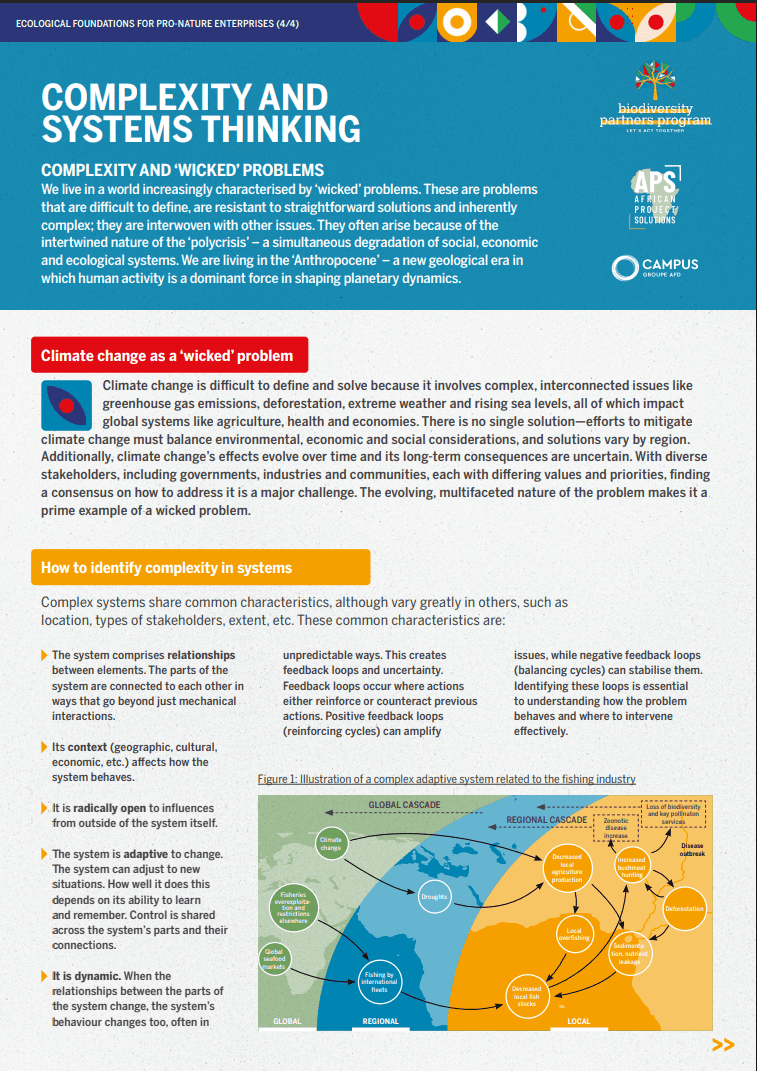
COMPLEXITY AND ‘WICKED’ PROBLEMS We live in a world increasingly characterised by ‘wicked’ problems. These are problems that are difficult to define, are resistant to straightforward solutions and inherently complex; they are interwoven with other issues. They often arise because of the intertwined nature of the ‘polycrisis’ – a simultaneous degradation of social, economic and ecological systems. We are living in the ‘Anthropocene’ – a new geological era in which human activity is a dominant force in shaping planetary dynamics.
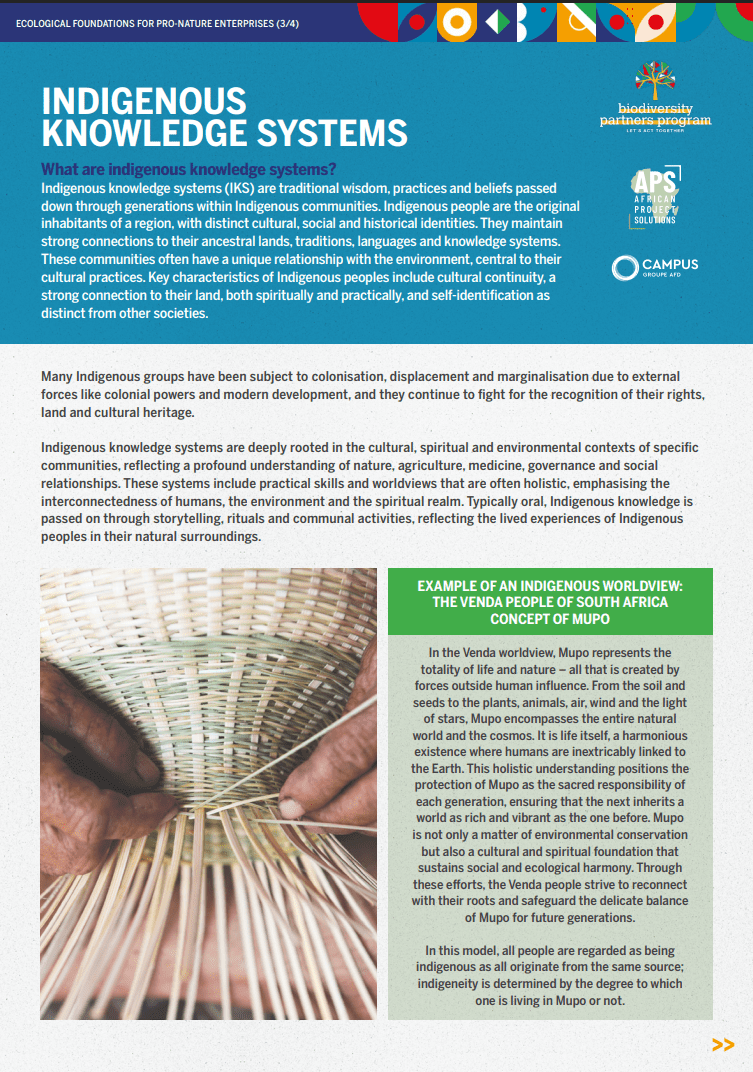
What are indigenous knowledge systems? Indigenous knowledge systems (IKS) are traditional wisdom, practices and beliefs passed down through generations within Indigenous communities. Indigenous people are the original inhabitants of a region, with distinct cultural, social and historical identities. They maintain strong connections to their ancestral lands, traditions, languages and knowledge systems. These communities often have a unique relationship with the environment, central to their cultural practices. Key characteristics of Indigenous peoples include cultural continuity, a strong connection to their land, both spiritually and practically, and self-identification as distinct from other societies.
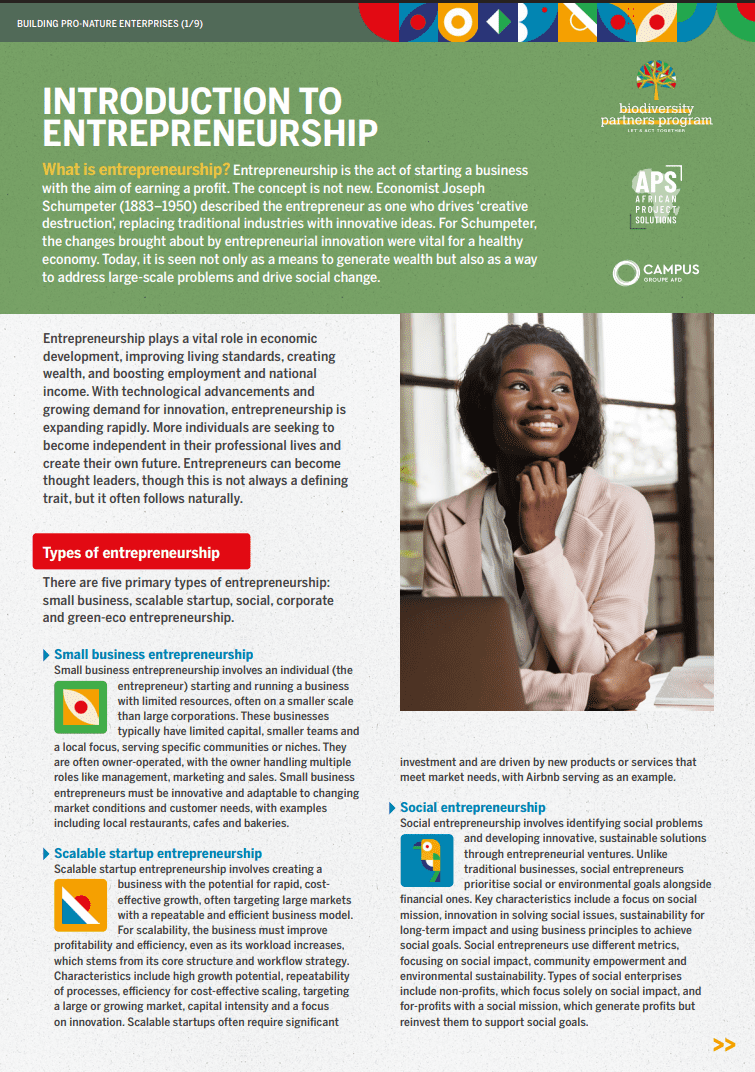
What is entrepreneurship? Entrepreneurship is the act of starting a business with the aim of earning a profit. The concept is not new. Economist Joseph Schumpeter (1883–1950) described the entrepreneur as one who drives ‘creative destruction’, replacing traditional industries with innovative ideas. For Schumpeter, the changes brought about by entrepreneurial innovation were vital for a healthy economy. Today, it is seen not only as a means to generate wealth but also as a way to address large-scale problems and drive social change.
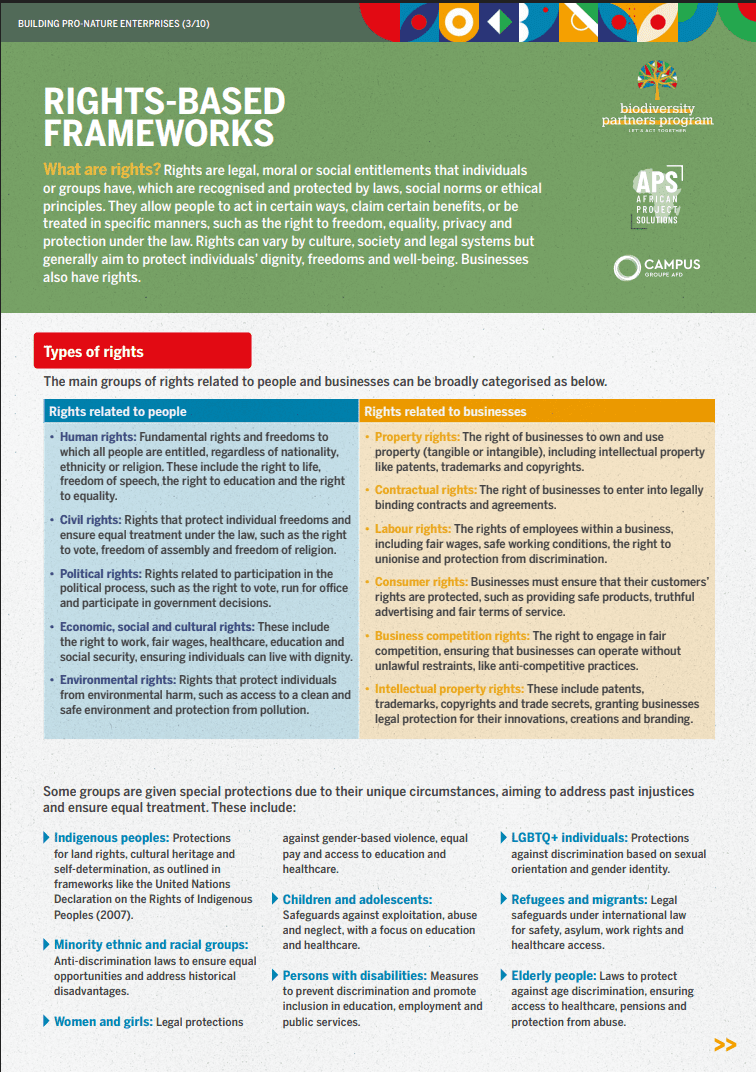
What are rights? Rights are legal, moral or social entitlements that individuals or groups have, which are recognised and protected by laws, social norms or ethical principles. They allow people to act in certain ways, claim certain benefits, or be treated in specific manners, such as the right to freedom, equality, privacy and protection under the law. Rights can vary by culture, society and legal systems but generally aim to protect individuals’ dignity, freedoms and well-being. Businesses also have rights.
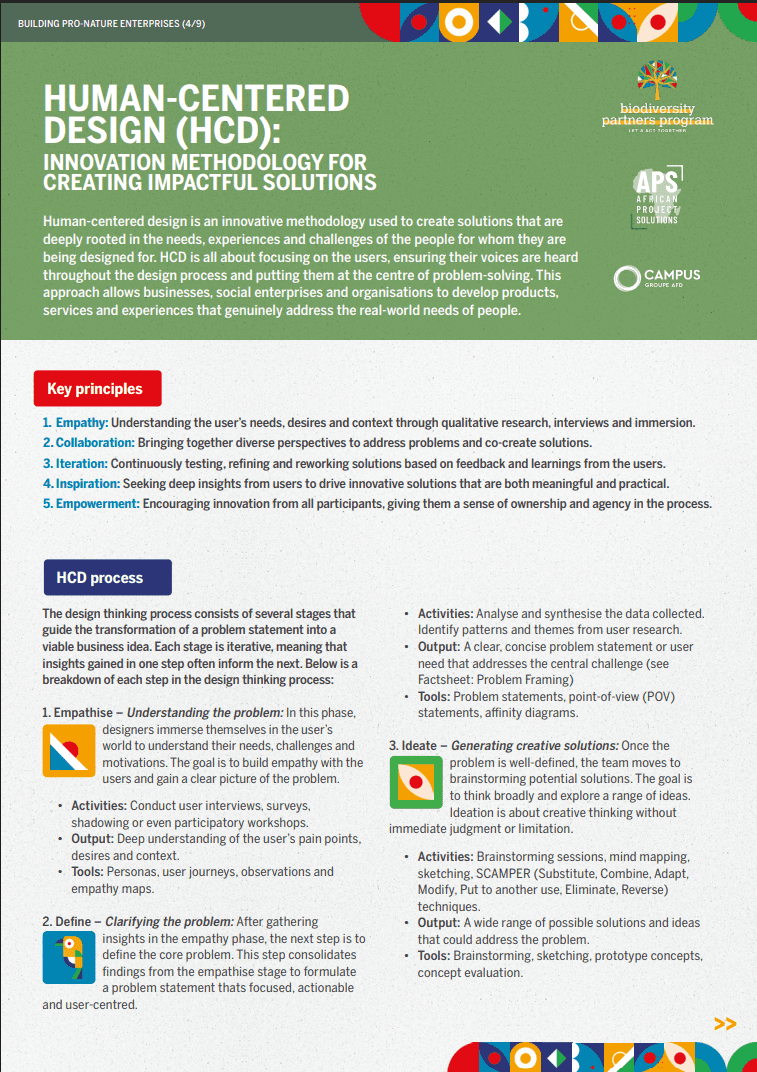
INNOVATION METHODOLOGY FOR CREATING IMPACTFUL SOLUTIONS
Human-centered design is an innovative methodology used to create solutions that are deeply rooted in the needs, experiences and challenges of the people for whom they are being designed for. HCD is all about focusing on the users, ensuring their voices are heard throughout the design process and putting them at the centre of problem-solving. This approach allows businesses, social enterprises and organisations to develop products, services and experiences that genuinely address the real-world needs of people.
At the heart of effective problem solving, lies the ability to frame problems properly. This is a strategic thinking skill, a design skill and a system thinking skill, which are key to tackling complex problems (see Factsheet on Complexity and Systems Thinking). It is also a key element in the front end of any innovation process because it enables better understanding of a problem and its positioning that results in actionable outcomes.
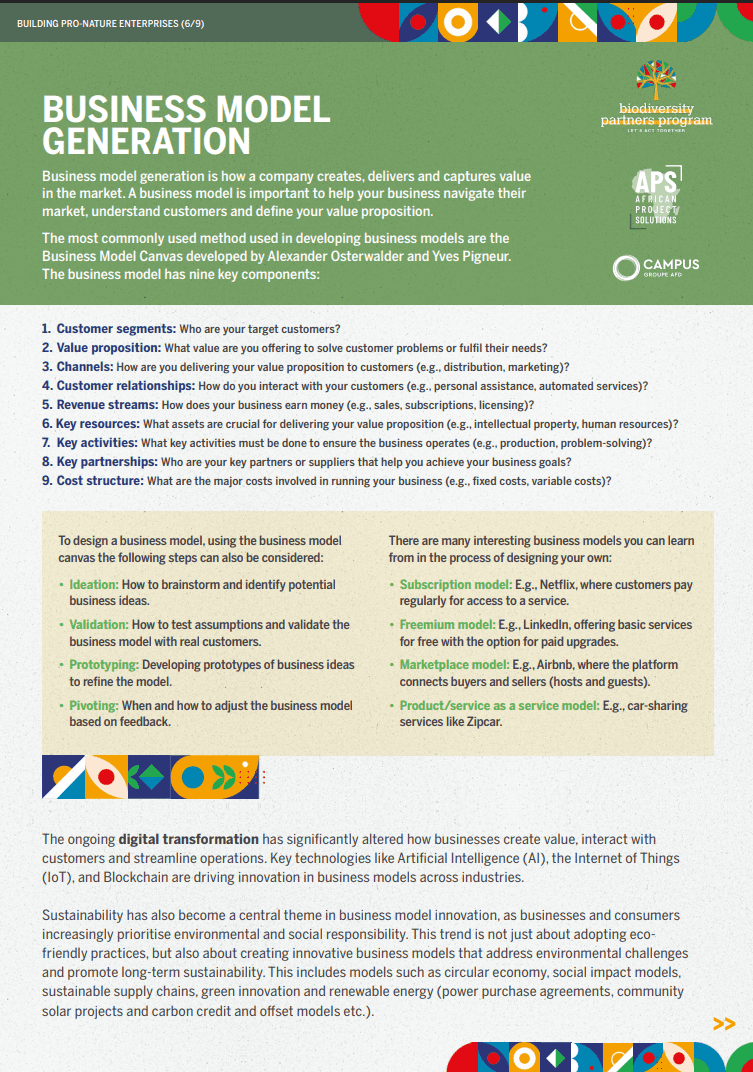
Business model generation is how a company creates, delivers and captures value in the market. A business model is important to help your business navigate their market, understand customers and define your value proposition. The most commonly used method used in developing business models are the Business Model Canvas developed by Alexander Osterwalder and Yves Pigneur. The business model has nine key components:
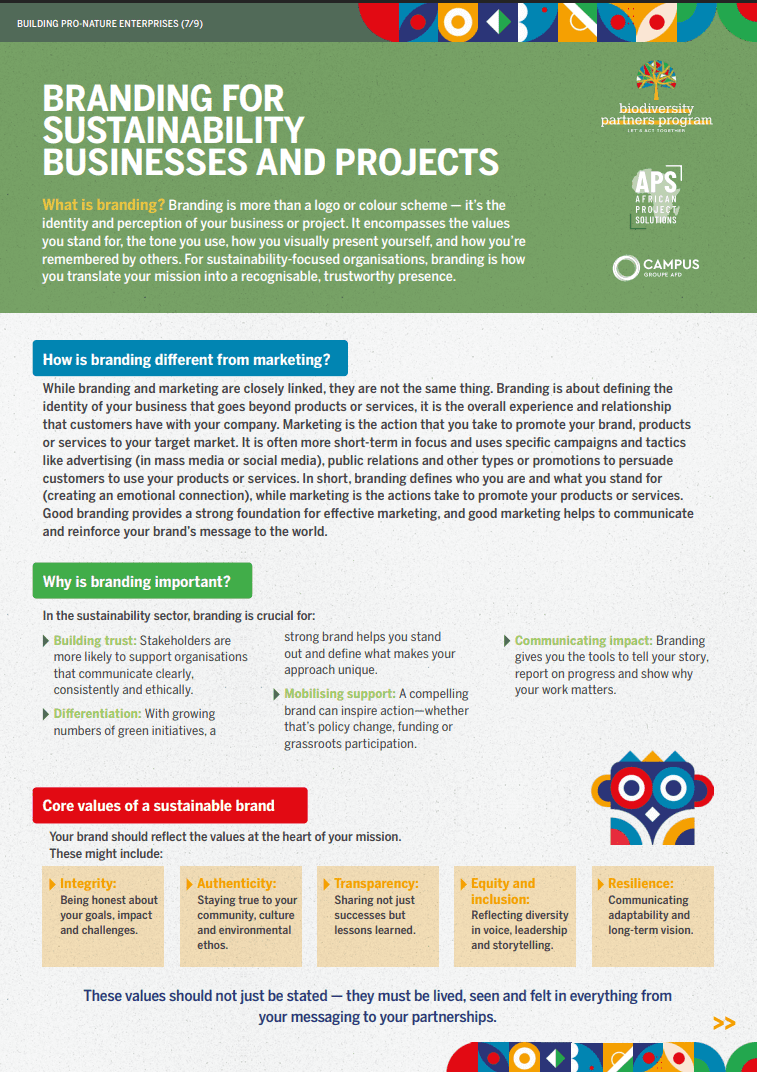
BRANDING FOR SUSTAINABILITY BUSINESSES AND PROJECTS
What is branding? Branding is more than a logo or colour scheme — it’s the identity and perception of your business or project. It encompasses the values you stand for, the tone you use, how you visually present yourself, and how you’re remembered by others. For sustainability-focused organisations, branding is how you translate your mission into a recognisable, trustworthy presence.
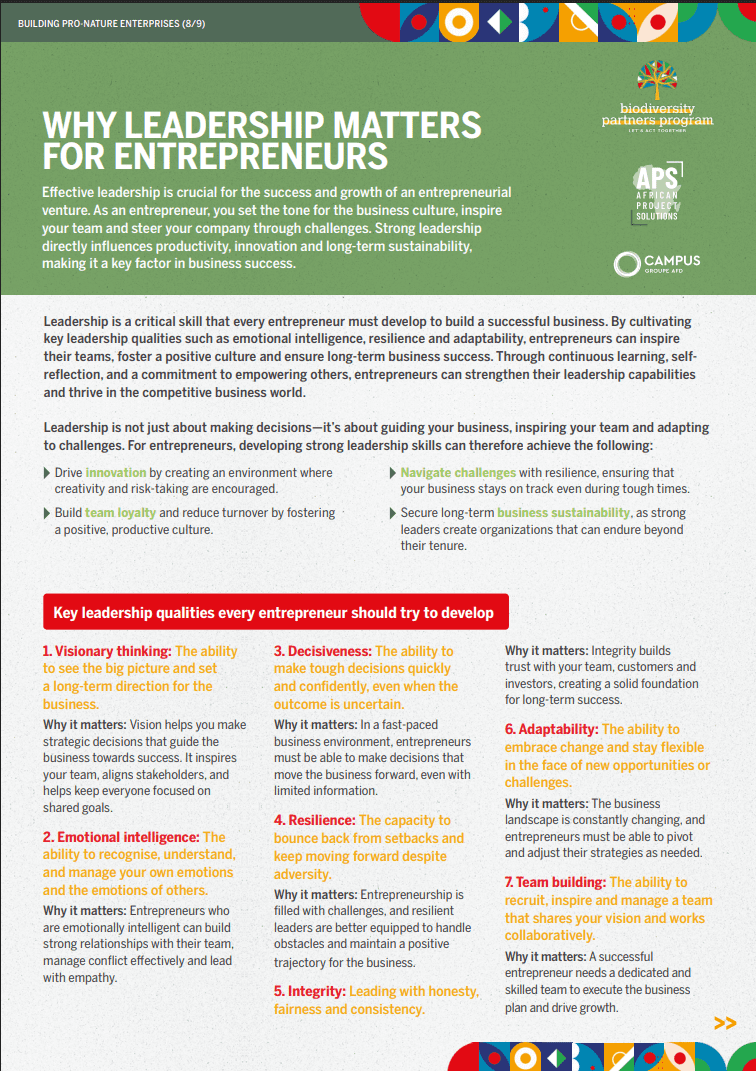
Effective leadership is crucial for the success and growth of an entrepreneurial venture. As an entrepreneur, you set the tone for the business culture, inspire your team and steer your company through challenges. Strong leadership directly influences productivity, innovation and long-term sustainability, making it a key factor in business success.
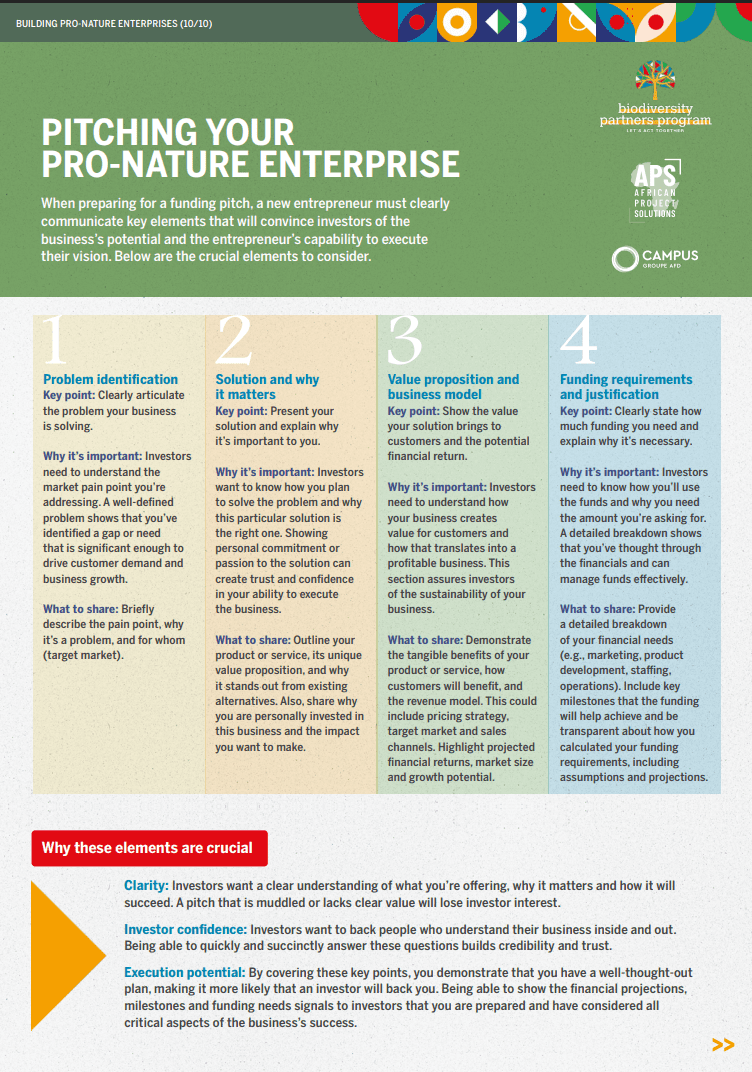
When preparing for a funding pitch, a new entrepreneur must clearly communicate key elements that will convince investors of the business’s potential and the entrepreneur’s capability to execute their vision. Below are the crucial elements to consider.
Episode 1 – Ecological transitions: Shifting towards a pro-nature future
What if the way we perceive the world shapes both the crises we face and the solutions we can imagine? In this thought-provoking episode, host Angela Coetzee, director of Biodiversity Partners Program Southern Africa and programme lead Stefanie Swanepoel unpack how ecological worldviews—from deep ecology to eco-feminism—shape the way we design development pathways, create policies and conduct business. Together, they explore what it means to move towards a truly pro-nature future in Southern Africa.
Episode 2 – Biodiversity: The foundation of life
Biodiversity underpins every aspect of our existence, from the food we eat to the air we breathe. In this episode, Angela Coetzee and Stefanie Swanepoel delve into why biodiversity matters for livelihoods and wellbeing, and the dangers of ignoring its decline. They discuss the urgent shifts in mindset and policy needed to stop ecological collapse and secure a thriving future for all.
Episode 3 – Indigenous knowledge systems in modern life
Hosted by Stefanie Swanepoel with special guest Prof. Richie Moalosi from the University of Botswana, this episode explores the richness of Indigenous knowledge systems across Africa. From architecture and fashion to product design, these knowledge traditions offer sustainable, innovative solutions. The conversation also highlights threats to these systems and practical ways to respect, preserve and integrate them into modern life.
Episode 4 – Complexity and systems thinking in the polycrisis
How do we make sense of interconnected crises like climate change, biodiversity loss and inequality? In this episode, Prof. Rika Preiser from Stellenbosch University’s Centre for Sustainability Transitions joins Stefanie Swanepoel to unpack complexity and systems thinking. They explore how these approaches can help practitioners design interventions that work in the messy, interdependent realities of the 21st century.
Episode 5 – Entrepreneurship for nature
Entrepreneurship is often framed in terms of profit and growth—but what does it look like when nature is at the centre? Angela Coetzee and Agnes Sibanda, entrepreneur and business coach, challenge myths of entrepreneurship and share lessons from pro-nature enterprises. They discuss the unique hurdles green entrepreneurs face and provide practical tips for building ventures that thrive while protecting biodiversity.
Episode 6 – Human-centred design for pro-nature business models
How can businesses create solutions that respond to the real needs of people and ecosystems? In this episode, Angela Coetzee and Keneilwe Munyai, programme coordinator for the Biodiversity Partners Program, discuss how human-centred design can transform business models. They highlight how this approach sparks innovation and ensures that biodiversity-friendly enterprises deliver contextual, lasting impact.
Episode 7 – Brand authenticity for biodiversity
In a crowded marketplace where greenwashing is rampant, authentic branding is more important than ever. Angela Coetzee and Stefanie Swanepoel explore what makes a brand resonate, why storytelling matters, and how pro-nature businesses can attract genuine communities of supporters. This episode offers practical advice for entrepreneurs seeking to build credibility and stand out as leaders for biodiversity.
Episode 8 – Reconnecting with nature and ecological leadership
What does it mean to truly reconnect with nature—and why does it matter for the future of leadership? Dr Makgati Mokwena, arts therapist and leadership educator, joins Stefanie Swanepoel to explore ecological leadership. Together, they discuss Indigenous wisdom, practical ways to deepen our relationship with the natural world and why leading for biodiversity means seeing ourselves as part of, not apart from, nature.
Knowledge Hub for organic agriculture & agrocology
Knowledge Products
Knowledge Hub for Organic Agriculture and Agroecology in Southern Africa (KHSA)
KHSA creates organic and agroecology knowledge that is locally driven, practically useful, and easy to share. All resources are co-created with the people who will use them, ensuring they respond to real knowledge gaps and are presented in accessible, user-friendly formats.
This overview provides links to more than 220 original manuals, infographics, videos, toolkits, and audio resources, developed by KHSA partners and available in multiple languages. We also invite you to sign up to the continental knowledge platform at https://kcoa-africa.org/, where open-source knowledge products from African knowledge hubs across the continent can be accessed, downloaded, and used.
EXPLORING AFRICAN PERSPECTIVES ON FOODSYSTEM LEADERSHIP
This case study series presents two African Food Fellowship-commissioned case studies exploring African perspectives on collective food system leadership in Malawi and Cameroon. The two case studies demonstrate how collective food systems leadership is manifested and what outcomes can be (or have been) achieved. The first case study is on a southern African organisation – Soils, Food and Healthy Communities (SFHC) – based in Malawi and the second is on Concertation Nationale des Organisations Paysannes au Cameroun (CNOP-CAM, translated in English to the National Federation of Peasants’ Organisations of Cameroon) based in central Africa.
African Food Systems Transformation Collective (AFSTC)
This network of researchers and food systems development experts help to inform philanthropies, governments and development finance organisations on funding strategies to support transitions toward sustainable, equitable and resilient food systems across Africa. In this brief series we developing a case for climate change investment toward livestock in Africa.